Most drivers who switch from petrol to an EV expect a learning curve. What they do not expect is how quickly some of their old driving habits stop feeling necessary.
While driving an electric car feels different, the adjustments almost always feel like upgrades rather than challenges. The silence, the instant pull from a standstill, and the way regenerative braking starts to seem second nature within a week are all part of a shift that goes beyond fuel type.
For anyone considering EV driving in Singapore, knowing what to expect before getting behind the wheel makes the transition considerably smoother.
The Sensory Shift: What Happens When You Push Start?
The first few seconds of driving an electric car are unlike anything you’ll experience in a petrol vehicle, and these are usually what you’ll expect:
The Sound of Silence
When you’re driving an EV, there’s no ignition roar or engine turning over. Most EVs emit a soft digital chime when ready, and some (including the Tesla Model Y) produce a low artificial sound at low speeds to alert pedestrians, as required by regulation. For a driver used to petrol, the quiet feels almost too still at first.
Always-on Awareness
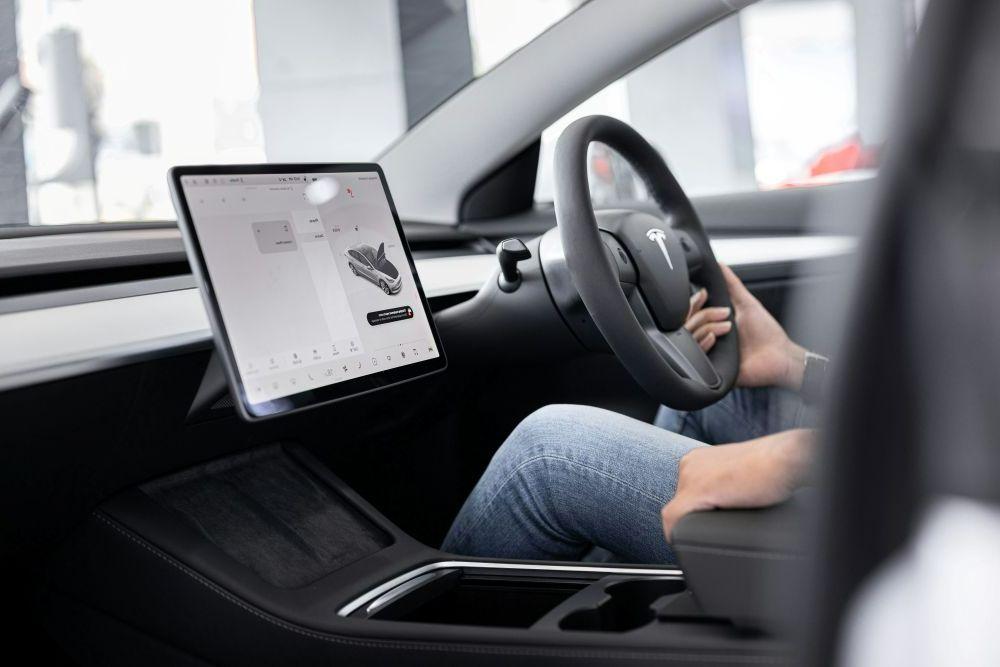
While a petrol engine idles, an EV simply waits. Models like the Tesla Model Y operate more like a connected device than a traditional vehicle.
For example, the system is active, climate control runs independently of motion, and the car responds the instant you apply the accelerator. Simply put, there is no ‘warming up’.
A More Comfortable Drive
Without engine vibration travelling through the cabin, the experience of driving electric cars through Singapore’s CBD traffic is noticeably less fatiguing. Road noise and tyre noise remain, but the constant low-frequency hum that petrol drivers filter out unconsciously is simply gone.
Performance Reimagined: Are Electric Cars Faster Than Gas Cars?
The question of whether electric cars are faster than gas cars depends on which part of the speed range you are talking about.
The Stoplight Sprint
Electric cars aren’t necessarily faster than gas cars. But with the ability to go from 0 to 50 km/h as you step on the accelerator, most EVs win decisively.
Electric motors deliver their full output the instant power is applied. On the other hand, a petrol engine needs to build RPMs, move through a gear change and overcome mechanical inertia before reaching the same point.
Instant Torque Explained
In electric cars, driving away from a standstill means 100% of available torque is accessible immediately, with no gearbox shift required. The result is a linear, continuous push rather than the stepped acceleration most petrol drivers know.
Smoothness over Shifting
Traditional automatics produce a brief hesitation or ‘shift shock’ each time the transmission changes gear, especially during hard acceleration. On the other hand, EVs like the BYD Seal have no gearbox at all.
Driving such an electric car means that the acceleration curve is unbroken, which feels different from anything a petrol automatic vehicle delivers.
Mastering the One-Pedal Technique and Regenerative Braking
Regenerative braking is the feature that changes EV driving most fundamentally, and it is the one most petrol drivers take longest to unlearn their instincts around.
Redefining the Brake Pedal
When you lift off the accelerator in an EV, the car slows more noticeably than a petrol vehicle would. The motor reverses its function, acting as a generator and converting kinetic energy back into battery charge. The sensation is often described as gentle, progressive resistance, as though the car is actively pulling itself back.
Adjusting to One-Pedal Driving
In heavy CBD traffic, this changes the physical experience of driving electric cars considerably. Frequent stops no longer require constant foot movement between two pedals. Lifting off slows the vehicle; pressing down accelerates it. Most Bolt fleet models allow drivers to adjust regeneration strength, or engage a full one-pedal mode that brings the car to a complete stop without touching the brake pedal at all.
Learning to Maximise Energy Recycling
Every deceleration feeds energy back into the battery, effectively charging your EV while driving. Practically speaking, a red light on Orchard Road or a slow crawl on the CTE can become a small recovery event rather than pure waste.
If you’re the kind of driver who prefers a smooth, anticipatory driving style (lifting early, coasting into stops), you’ll see better real-world range than those who brake hard at the last moment.
Handling and the “Skateboard” Physics of EVs
The physical architecture of an EV produces handling characteristics that feel different from the moment you take a corner. And these factors are driving that difference:
- The “Skateboard” Layout: In a petrol car, the engine sits at the front, creating a forward weight bias that influences steering feel and body roll. In most BEVs, the battery pack spans the entire floor between the wheels. This layout also spreads mass evenly across the vehicle and places the heaviest component as low as possible.
- The Low Centre of Gravity: In models like the MG 4 EV, the battery-floor layout lowers the centre of gravity well below that of any front-engine petrol car. Through corners, this produces a flatter, more stable feel. The car also follows its line without the lean that compact petrol hatches often exhibit under the same conditions.
Weight Versus Agility
EVs are heavier than their petrol equivalents due to the battery pack. However, that weight is distributed so evenly and sits so low that it contributes to stability rather than sluggishness.
The planted, settled feel that many drivers associate with premium petrol cars comes partly from weight distribution. When you’re driving an electric car, you’ll enjoy that built-in, agile feature.
Behavioural Changes: Adjusting Your EV Driving Habits
While driving an EV is not as difficult as some expect, you’ll need a small recalibration of your right foot.
While the controls are familiar, what changes is how you think about energy, range and driving rhythm. Also, the adjustment period is less about new skills and more about new habits.
Two, in particular, tend to develop quickly:
Reading the Range, Not the Gauge
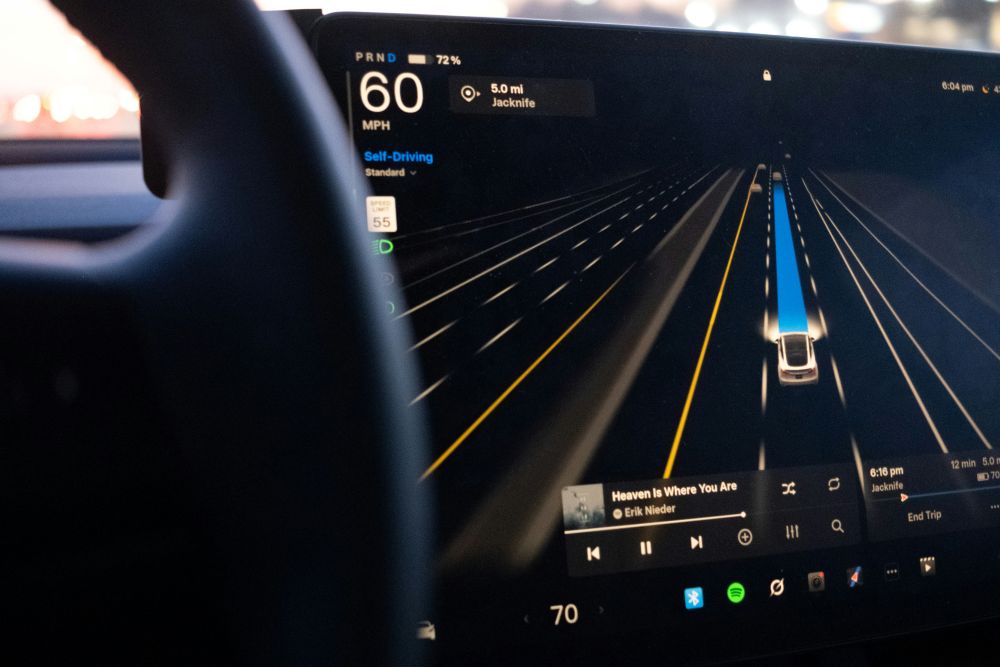
Since an EV replaces the petrol gauge with a percentage and a remaining-kilometres figure, the relationship with ‘fuel’ becomes more granular.
You’ll start noticing how expressway speeds drain the battery faster than city driving, or how a morning preconditioning adds a few kilometres before the day begins.
Remember, range awareness is not the same as range anxiety. It is simply paying attention to a different number, just as a petrol driver watches the fuel light.
Driving Style as Efficiency Feedback
The quiet cabin and the real-time energy display in most electric cars create a natural feedback loop. When you’re driving an electric car, you’ll easily see how your hard acceleration directly affects your consumption figures.
What’s more, maximising your range will come naturally because smooth, anticipatory driving may become your habit. You may even become calmer at the wheel without being told to because the car makes the trade-off between speed and efficiency visible on every trip.
The Bolt Car Leasing Advantage: Experience The Future Risk-Free
If you’re wondering whether driving an electric car suits your actual daily routine, an EV car lease can be a practical solution. With a long-term car rental, you can enjoy these benefits:
Test-Driving the Transition
Bolt Car Leasing lets you experience driving electric cars across your specific commute, whether that is a daily run from Tampines to the CBD, regular cross-island trips or mostly short, local errands.
The answer to whether an EV suits your lifestyle comes from living with one, not from a weekend trial. A lease term gives you access to that genuine data while keeping your monthly cost fixed and predictable.
Zero Ownership Stress
While your EV driving experience is new, the support behind it need not be. Bolt Car Leasing’s long-term car rental packages include 24/7 roadside assistance, routine maintenance and road tax coverage throughout the lease.
Wide EV Selection
Bolt Car Leasing allows you to find the ideal electric car that matches your driving lifestyle. Some of the EV options include:
- BYD Sealion 7: This premium electric SUV with approximately 460 km of range and Blade Battery technology is well-suited to families and corporate clients needing space alongside EV efficiency.
- MG 4 EV: This compact, city-focused BEV, with a low centre of gravity and strong regenerative braking, is practical for daily city driving.
- Tesla Model Y: The benchmark for EV driving in Singapore, the Tesla Model Y offers a long range, one-pedal capability and seamless access to the Tesla Supercharger network island-wide.
- BMW X5 Mild Hybrid: For drivers not yet ready for a full BEV, the X5 Mild Hybrid provides improved fuel efficiency and familiar driving dynamics with a premium feel.
From Petrol to Electric: A True Upgrade
EV driving is quieter, faster from a standstill and more intuitive in traffic than any internal combustion engine can match. When you switch from petrol to electric, you’re not simply doing a fuel swap. Instead, you’re getting an upgrade to how your daily drive feels.
And if you want the smartest way to experience that shift without the financial risk of car ownership, opt for an EV car lease. Explore Bolt Car Leasing’s wide range of electric cars and find the modern vehicle that matches your lifestyle.